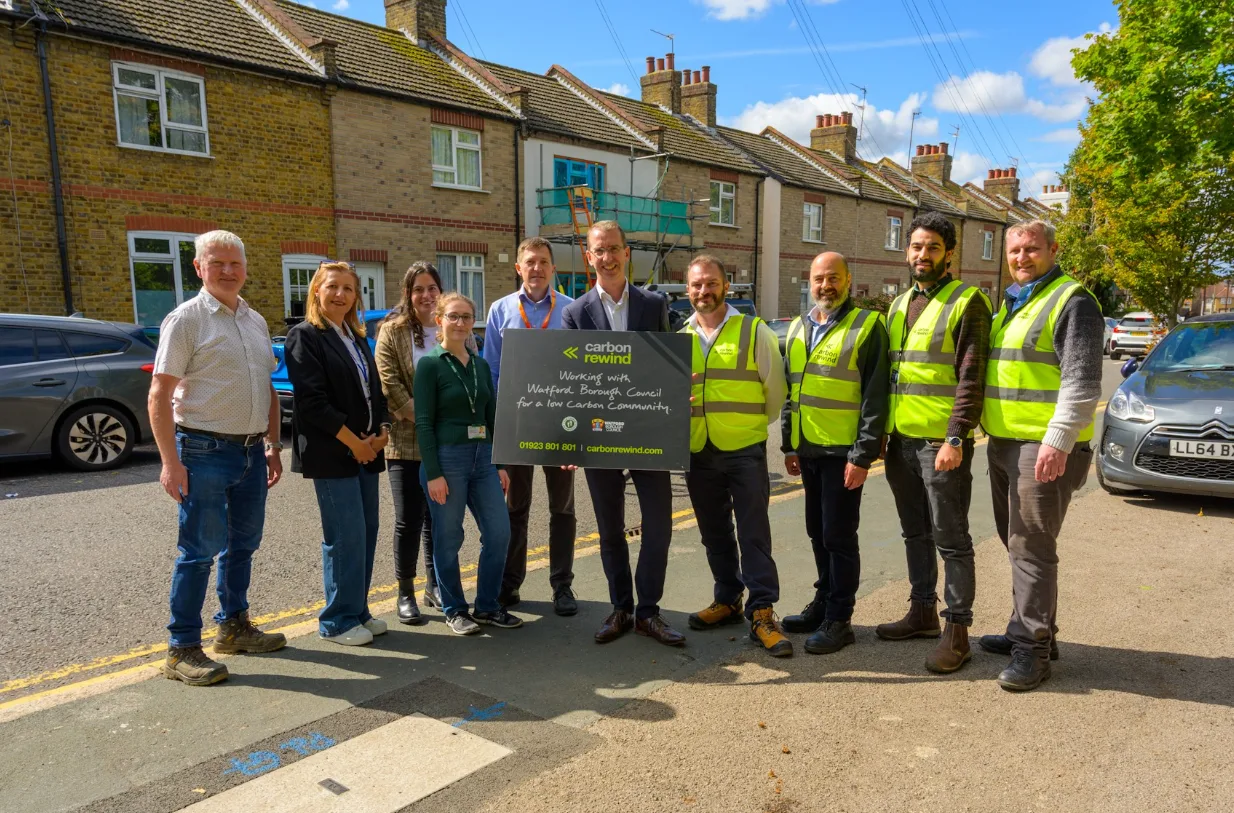

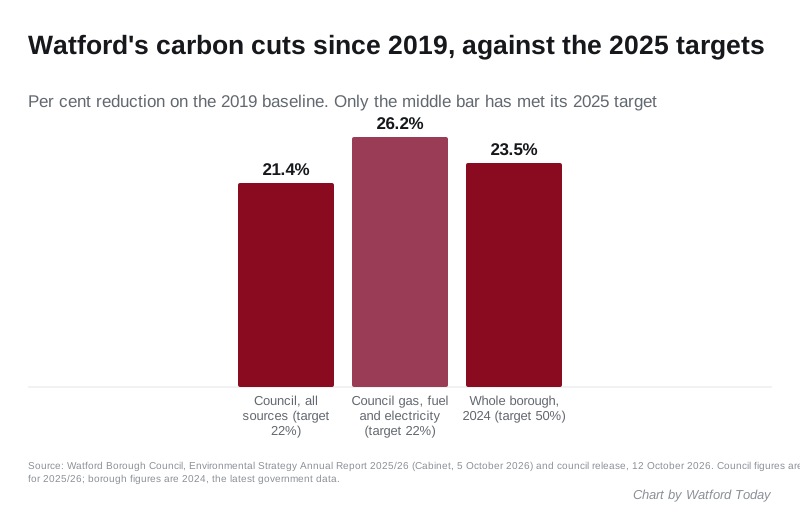
The council cut its own emissions 21.4% against a 22% target for 2025. Trees and green space beat their goals; recycling, water and borough carbon lag.
Watford Borough Council’s own carbon emissions are 21.4% lower than in 2019/20. That is just short of the 22% cut it set itself for 2025. The council’s announcement of the figures on Monday led with the target it did beat, for gas, fuel and electricity. Its annual report shows a more mixed picture, with clear wins on trees and green space and slower progress on recycling, water and the town’s wider emissions.
The Environmental Strategy Annual Report 2025/26 went to the council’s Cabinet on 5 October. The council’s release on 12 October is headed “Watford celebrates good progress on environmental strategy”.
The quick answer
- Council emissions: 1,751 tonnes of CO2e in 2025/26, down 21.4% on 2019/20. The 2025 target was 22%.
- Gas, fuel and electricity alone: down 26.2%, which does beat the 22% target.
- The whole borough: down 23.5% between 2019 and 2024, against a 2025 target of 50%.
- Beaten: tree canopy at 26% and 42% of council green space managed for nature, both past their 2030 targets.
- Behind: recycling fell to 48.4%, and household water use is about 167 litres a day against a 145-litre target.
The target the release did not lead with
The release says fuel and electricity emissions “have fallen by 26.2%, exceeding the 2025 target of a 22% reduction”. That is true for that part of the council’s footprint, which the report calls scope 1 and 2.
The overall figure is the one the strategy is built around. It also counts water, business travel and leased buildings such as the leisure centres. On that measure the officers’ report to Cabinet is plain: “while our emissions have decreased by 21.4%, they have still have not quite reached our 2025 target of 22%.”
The council’s headline figures appendix puts its 2025/26 footprint at 1,751 tonnes of CO2e. The next milestones are a 40% cut by 2027 and 75% by 2030.
Where Watford is ahead
Some of the targets have already been passed with years to spare. According to the report’s summary:
- Tree canopy covers 26% of the borough. The targets were 20% by 2027 and 25% by 2030.
- Green space for nature: 42.4% of council-owned green space is managed to support wildlife, against a 2030 target of 30%. The council says it will raise the target.
- Trees planted: 26,000 trees had been planted or given away by the end of March 2025, beating the tree planting target.
- Parks: Watford kept its 17 Green Flag parks, the most in Hertfordshire, and plans to put another forward in 2026/27.
The canopy figure is an estimate. The council dropped more than 3,000 points on aerial imagery of the borough using the i-Tree Canopy tool and counted how many landed on trees. Its report calls the result “a proxy”.
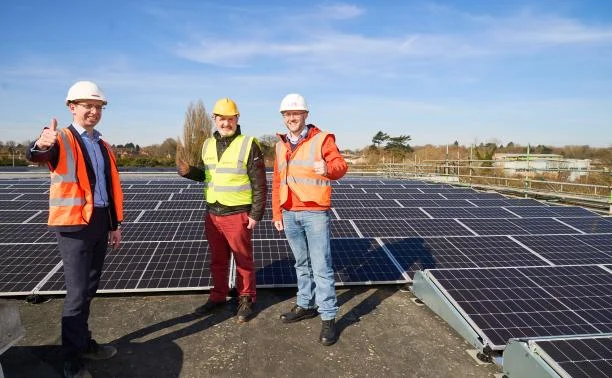
Buildings are also improving. The council’s leisure centres cut their emissions by 18% in a year. Woodside Leisure Centre fell 27%, mainly because of rooftop solar panels that started working in 2025. The report notes that this is the first year the council’s leased buildings have come in below their 2019/20 level.
Where Watford is behind
The borough as a whole. Watford emitted 315,300 tonnes of CO2e in 2024, the latest year the government has published. That is 23.5% below 2019, and 13% below 2023. Emissions per person are down 27%. But the 2025 target for the borough was a 50% cut, and 65% by 2027. The report says much of the latest fall came from waste management emissions, which dropped 55% in a year.
Recycling. The borough recycled 48.4% of its waste in 2024/25, down from 49.6% the year before. The target is 54% by 2027 and 60% by 2030. Total waste is 10% below 2019/20, and the average household produced 718kg.
Water. Residents use about 167 litres of water each a day, up on the year, against a 2025 target of 145. The figure is Affinity Water’s estimate for its Colne community, which also covers St Albans, because the company cannot break it down further. The report blames a drier year. It also notes that homes on a water meter use about 25% less than those without one.
Inside the Town Hall and museum, staff use 30 litres a day each, down from 31. The council’s 2030 target is 12.
Getting ready for a hotter climate. The “Adapting to Change” part of the plan is the furthest behind. Of its nine actions, one is on target, six are delayed and two are being dropped.
What the council says
Elected Mayor Peter Taylor said in the release: “We have made really encouraging progress, from cutting emissions and investing in renewable energy to improving our green spaces and supporting residents to make their homes more efficient.”
Councillor Ian Stotesbury, the portfolio holder for transport and sustainability, said “there is still a very long way to go”. He added that “our national government must ensure that climate and nature action is funded properly”.
What it means for you
If your home is cold or expensive to heat. The £3.75 million Warmer Homes programme, funded by the Department for Energy Security and Net Zero, covers Watford and Three Rivers. It pays for measures such as air source heat pumps, solar panels and external wall insulation, aiming to bring homes up to at least an EPC C rating. The council says a typical three-bedroom semi rated D has energy bills of £2,419 a year, against £1,756 at C, a saving of £663. Details are on the council’s Sustainable Watford pages.
If you want to help the numbers that are slipping. Recycling and water are the two the council cannot fix on its own. Our Watford bin collection days page sets out what goes in which bin. The report’s own advice on water is to use a water butt and a watering can rather than a hose, run washing machines and dishwashers only when full, and fit low-flow taps and aerated showers.
If you want to see what comes next. The report was due to go to the council’s Climate Emergency and Sustainability Forum on 13 October. The full delivery plan, with every action rated, is in Appendix B. The river work under way at Oxhey Park is part of the same strategy: see our report on the River Colne restoration.
Sources
- Watford Borough Council, Environmental Strategy Annual Report 2025/26, report to Cabinet, 5 October 2026, with appendices 1, 2, A and B
- Watford Borough Council, Watford celebrates good progress on environmental strategy, 12 October 2026
Have your say